
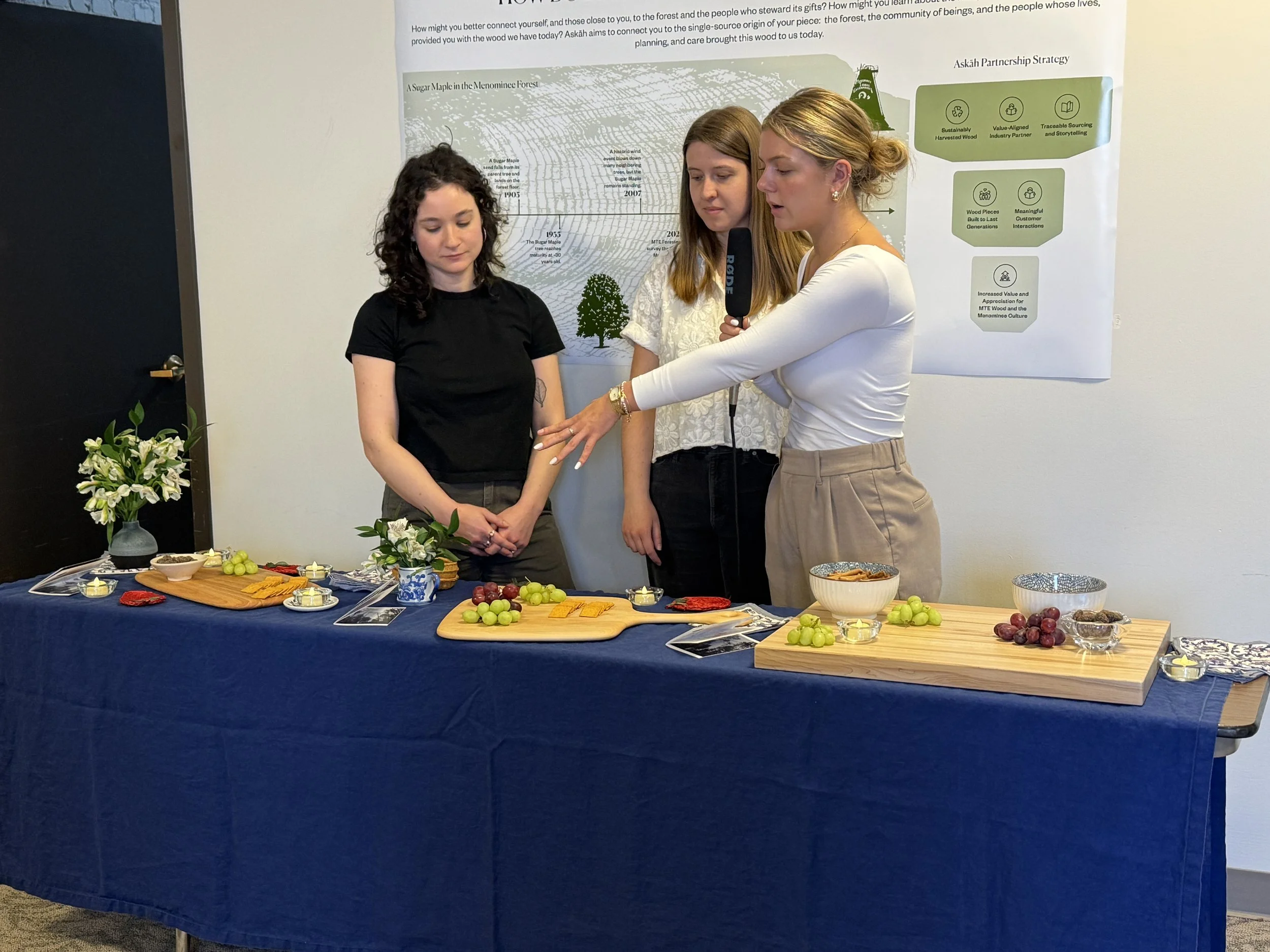
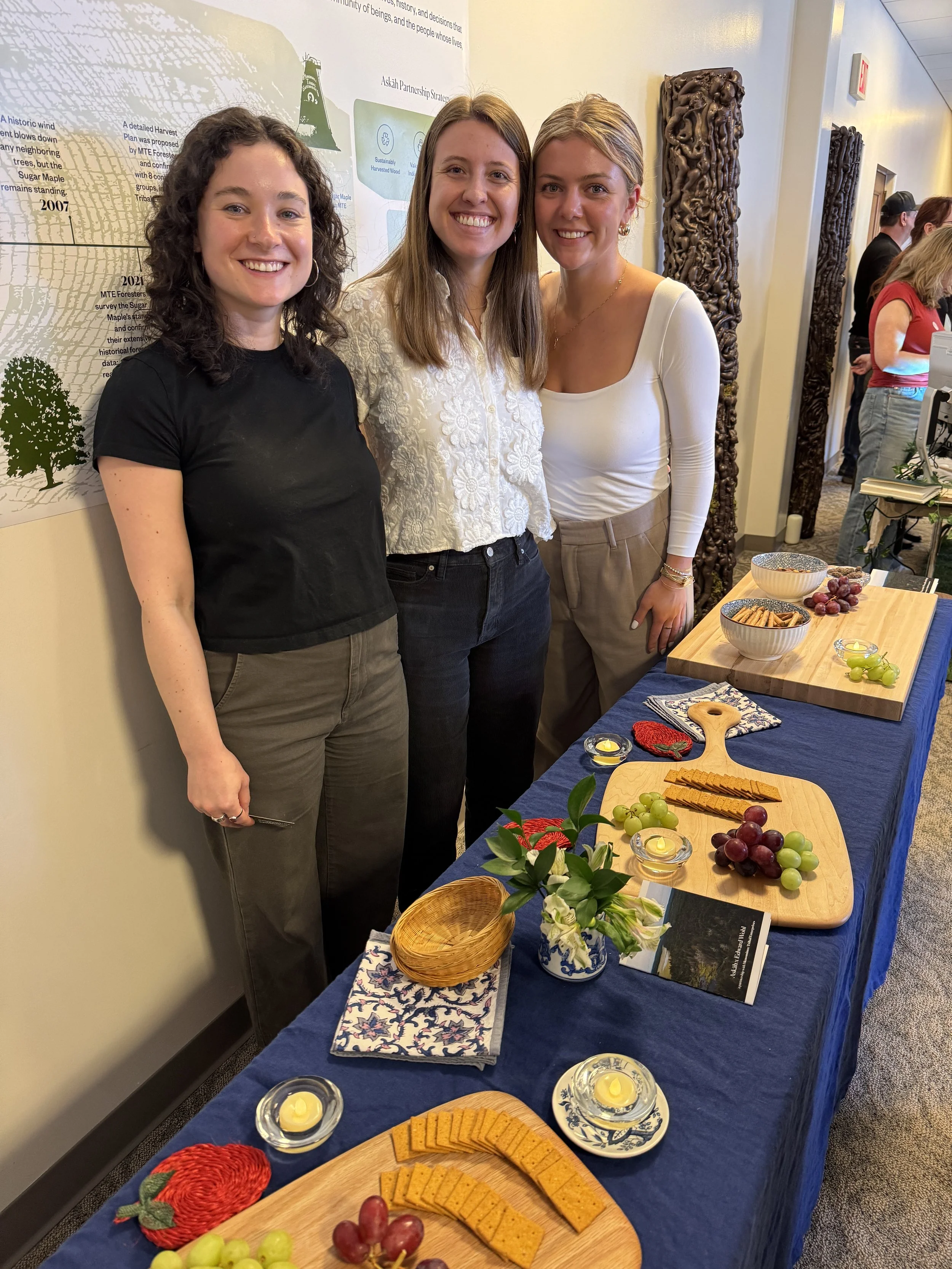
U. Wisconsin-Madison Master of design + innovation team AskAh
Guiding a graduate student design team from well-intentioned ambition to a viable proof of concept
ASKAH AT A GLANCE
ENGAGEMENT FORMATS
By Design Session → Project Partnership
CONTEXT
Graduate capstone project
MY ROLE
Strategic Impact Advisor to the Askāh student team.
WHAT I DID
Identified feasibility risks; reframed scope from furniture production to multiple product typologies; guided the team to proof of concept; facilitated introductions to industry partners; and advised business, marketing, and communications strategy through real-world testing.
OUTCOME
Public presentation at the Design Horizon Symposium; strong industry interest; and a strategic roadmap extending beyond the constraints of an academic term.
"I make things of wood… that are quiet, peaceful, and a pleasure to touch and look at. My approach emphasizes select materials, structural integrity and utility. I like to let the wood do the work — to coax nature to imitate art.”
—Edward Wohl (1942 - 2023)
BACKGROUND
My involvement in design education has included teaching, curriculum design, mentoring, judging, and hiring students into their first professional roles. When I was invited to work with a University of Wisconsin–Madison MD+I student team, I was eager to learn more.
PROGRAM KICKOFF
At the kickoff of the 2024-25 program, students were introduced to industry partner Menominee Tribal Enterprises (MTE) and toured the Menominee Reservation and iconic MTE sawmill. There, Menominee representatives shared the legacy of Menominee forestry — 160 years of stewardship grounded in selective harvesting practices. The principle of taking only “what the forest can give” was outlined by Menominee Chief OshKosh in 1864, rooted in values of respect and reciprocity.
EMERGING VISION
As the fall semester progressed, individual student interests coalesced into team projects. One team, calling themselves Askāh — “white pine,” the sacred tree of the Menominee People—presented an ambitious vision: growing a network of values-aligned partners to produce heirloom-quality furniture made from Menominee wood, each piece marked to honor the forest it came from.
The team’s vision mirrored a line that I love in Richard Powers’ Pulitzer Prize-winning novel, THE OVERSTORY:
“When you cut down a tree, what you make from it should be at least as miraculous as what you cut down.”
CONSTRAINTS AND REFRAMING
When I met the team on campus in February 2025, they had eight weeks remaining — including Spring Break — to design, produce, and publicly present their work. None had prior experience designing or building. While I loved the idea of celebrating Menominee wood, drawing on my experience in the furniture industry, I raised a critical concern: producing a finished piece of furniture worthy of Menominee values was unrealistic within their constraints. Rather than narrowing ambition, however, we reframed it.
THE WORK
I suggested the team expand the concept from furniture alone to a broader set of product types, still “luxury goods.” I specifically pointed them toward cutting boards as a potential proof of concept. Simple enough to execute with care in the remaining weeks, yet strong enough to demonstrate that raw lumber could become meaningful, heirloom-quality products, the choice of cutting boards further inspired the team.
INDUSTRY PARTNERSHIP
I introduced the team to Jonathan Wohl of Edward Wohl Woodworking & Design, whose 40+ year studio practice exemplifies precisely the ethos of the Askāh vision. The Wohl studio’s deep appreciation for wood’s natural beauty is evident in their signature cutting boards and other pieces.
It was a bonus when I learned that Jonathan had read and been inspired by a 2023 feature article on MTE in THE NEW YORK TIMES. Sharing that he recalled thinking at the time, “Their respect for the wood makes me want to work with the Menominee People,” confirmed my matchmaking intuition.
Importantly for the students, Jonathan was also pleased to help them and with his studio based less than an hour from campus, in-person collaboration was all the more feasible. In advance of April’s Design Horizon symposium, the Askāh team was relaying wood — hand-delivered from the Menominee Forest — to the Wohl Studio.
PUBLIC PRESENTATION
The Askāh team ultimately presented three cutting boards as their proof of concept at the symposium, two produced by Jonathan Wohl’s studio; the third by Central Wisconsin Woodworking, an existing MTE partner. Collectively, the project attracted interest from MTE leaders, designers, manufacturers, and sustainability-minded partners.
CONTINUED STEWARDSHIP
As the students chose to continue the project independently into summer 2025, I remained engaged as Strategic Impact Advisor, supporting the evolution of their work into a broader business, marketing, and storytelling strategy. To ground the work in real-world context, I invited the team to Chicago during NeoCon / Design Days to see how sustainability narratives are presented, materials are sourced, partnerships are formed and products showcased. I also arranged appointments with different manufacturers’ representatives allowing the team to further stress-test their concepts.
REFLECTION
The project demonstrated how judgment, restraint, and respect for context can elevate student work beyond the classroom — and how ambitious ideas can be responsibly grounded without losing their meaning.
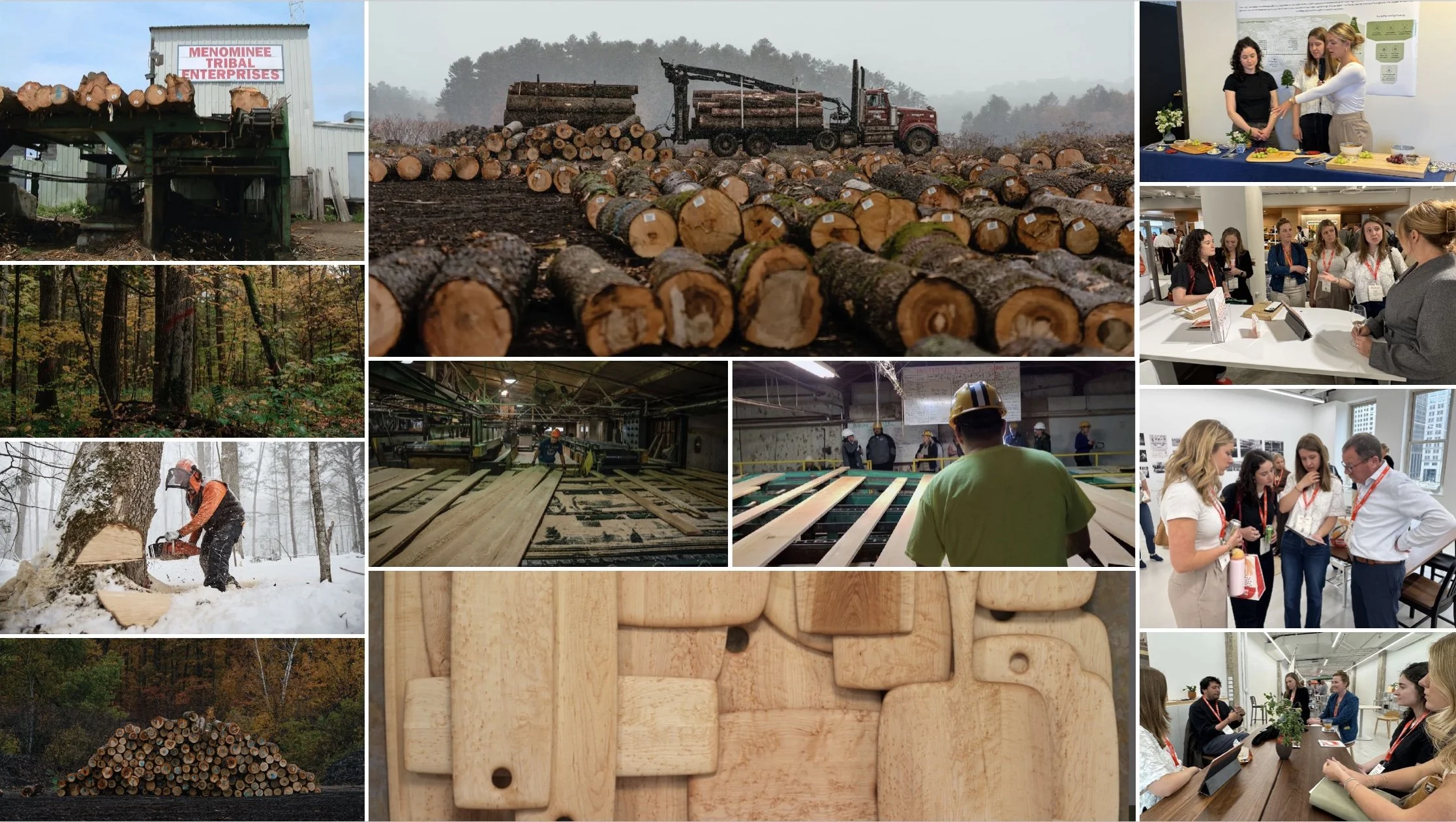
Image credits: Edward Wohl Woodworking & Design, Fall Art Tour News, Nels Huse, Petr Krejcí, Menominee Tribal Enterprises, The New York Times